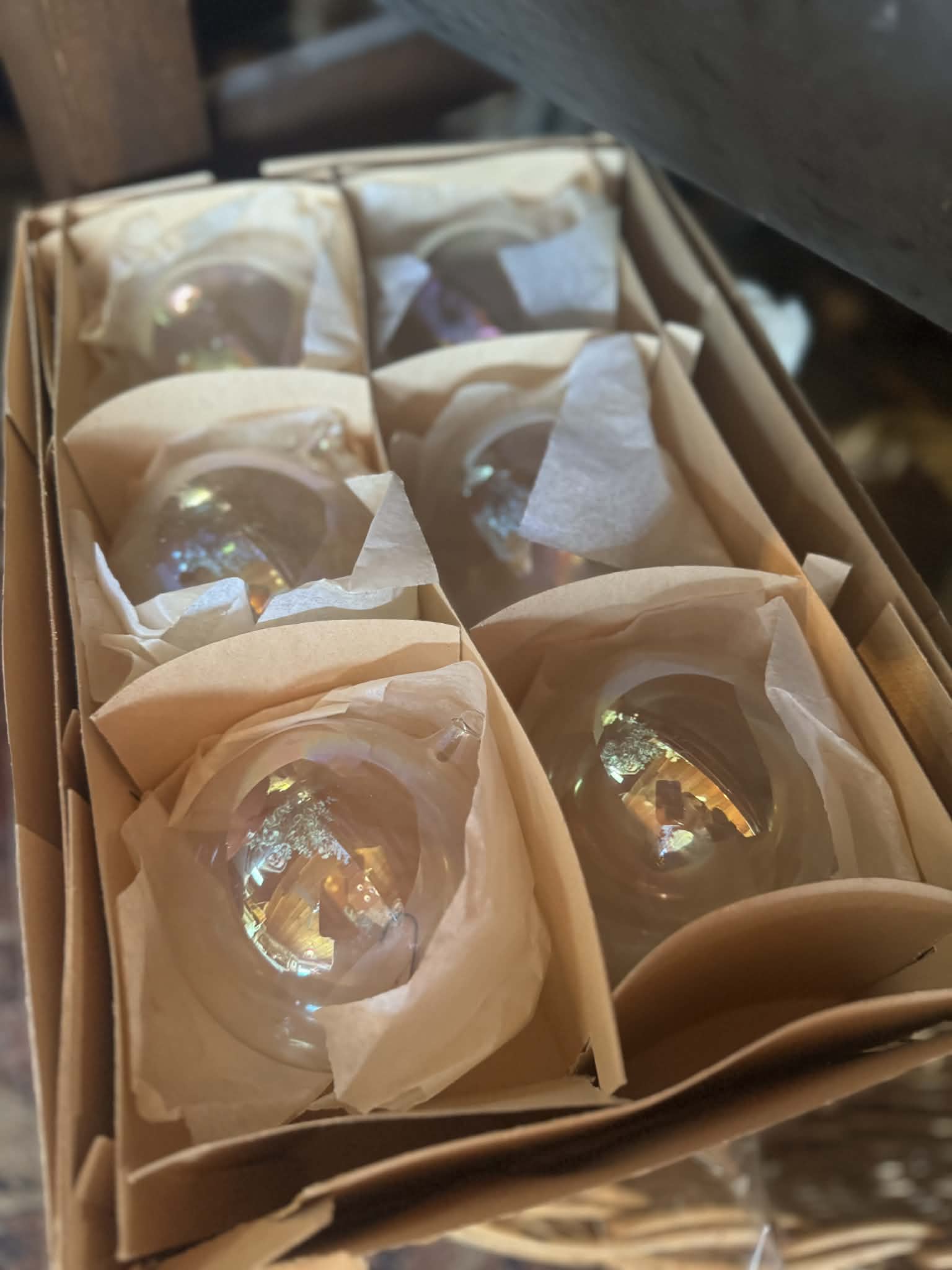
The Enchanted History of East German Blown-Glass Ornaments: The Holiday Bubbles Everyone Is Collecting
The Enchanted History of East German Blown-Glass Ornaments

Some holiday treasures feel like they come straight out of a fairytale. This season, that magic arrived in the form of East German blown-glass ornaments - tiny, weightless spheres that look exactly like shimmering bubbles caught in winter light. These ornaments were hand-blown in the mid-20th century in the Erzgebirge region of East Germany, a place where glassmaking traditions run centuries deep.
Despite political divides and limited materials, artisans continued crafting fragile beauty behind the Iron Curtain, one translucent bubble at a time. Today, these ornaments are among the most collectible and beloved vintage holiday decorations - and you can find a curated selection across from the register at STARS Antique Market in Hermosa Beach.

Why Collectors Love These “Holiday Bubbles”
East German blown-glass ornaments are unlike anything made today. Their charm comes from:
- Ultra-thin glass They’re feather-light, so thin they almost float on the branch.
- Iridescent, bubble-like color Soft washes of pink, aqua, gold, and silver that glow in candlelight.
- Organic, hand-blown shapes Tiny ripples and slight asymmetry that reveal the human touch.

A Brief History of Beauty Behind the Curtain
The 1940s–1960s were challenging years in East Germany. Yet, in small villages in the Ore Mountains (Erzgebirge), families continued blowing glass using traditional tools and tin-based paints. These ornaments were exported for Western currency, making them essential to local economies.
Every bubble-like ornament represents:
• Skilled craftsmanship
• Resourcefulness in scarce conditions
• A legacy passed down through generations Owning one is like holding a small piece of art history.
How to Identify Authentic Ornaments If you’re building a collection, look for:
• Light-as-air weight
• Soft, pastel hues rather than bold modern colors
• Simple silhouettes—rounds, icicles, teardrops
• Metal caps stamped “Germany” or “GDR”
• A slight wobble or asymmetry from hand-blowing These markers separate true mid-century pieces from contemporary reproductions.

How to Style East German Ornaments (HPBH Style)
These ornaments deserve to be showcased. Here are my favorite ways to style them:
-
Clustered in a glass bowl or compote They look like a bowl of shimmering bubbles - perfect for an entryway or holiday table.
2. Hanging from clipped evergreen stems Create a simple European-inspired arrangement in a tall vase.
3. Layered on a slim Christmas tree Their translucency makes them glow beautifully on sparse or Scandinavian-style trees.
4. Mixed with brass or silver The metal tones reflect the colors of the ornaments and amplify their glow.
5. As gifts tied onto packages The ultimate hand-picked detail. These little bubbles make any space feel magical.

Where to Find Them
This week, I’ve added a fresh selection of East German blown-glass ornaments across from the register at STARS Antique Market (upstairs in the Big Red Barn). Each one was hand-picked for its color, condition, and story. Come early - I can already tell these are going to disappear quickly.


Leave a comment
This site is protected by hCaptcha and the hCaptcha Privacy Policy and Terms of Service apply.