The Little Wooden Men Who Breathe Christmas Magic: Germany’s Räuchermännchen
A Holiday Discovery in a Fairytale House
Last weekend, I stepped through the door of an estate sale and found myself transported into the pages of Hansel and Gretel. The walls were adorned with antique wooden candy molds from the early 1900s. Cuckoo clocks ticked their mechanical symphony from every corner. Gingerbread boards - those carved wooden molds that create the elaborate cookies Germans have been making for centuries, hung like artwork throughout the cottage.

And then I saw them: the most impressive collection of Christian Ulbricht nutcrackers I have ever encountered.
Dozens of them stood at attention on shelves and mantels - kings and soldiers, foresters and fishermen, each one hand-carved and hand-painted with meticulous detail. I couldn’t help myself. I went home with a few of those, too. But it was a smaller figure, tucked between a towering nutcracker and a dust-covered music box, that truly captured my attention.
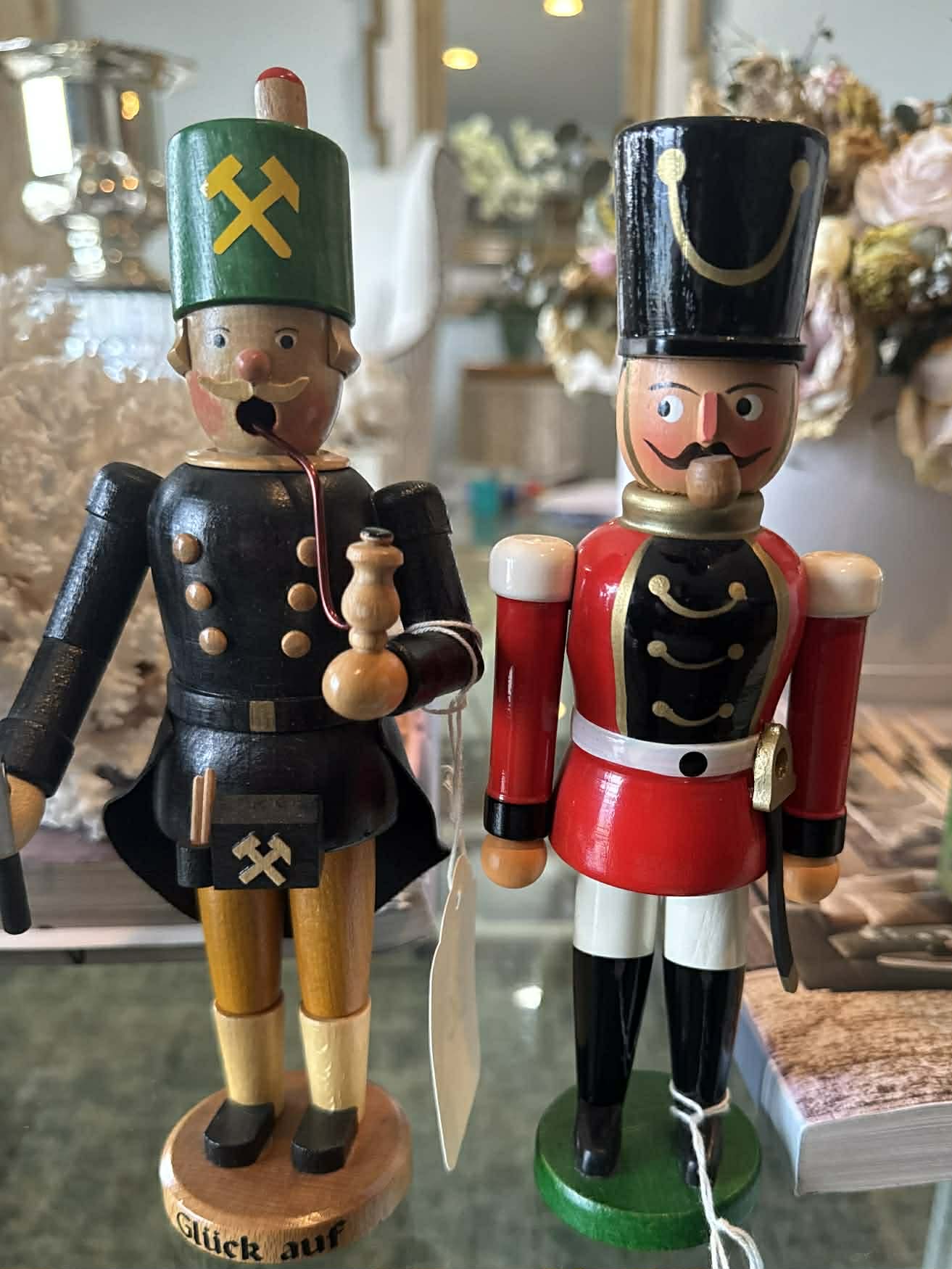
A peculiar little wooden man no taller than my hand.
He wore a miner’s cap and held a tiny lantern. His mouth was open, as if frozen mid-conversation. “Do you know what that is?” the estate sale volunteer asked, noticing my fascination. I shook my head. “That,” she said with a knowing smile, “is a Räuchermännchen. A smoker man. Light an incense cone inside him, and he’ll breathe smoke like he’s puffing on an invisible pipe.” I bought him immediately. And then I found his companion - a jolly Santa figure with rosy cheeks - and bought him too. I went home with my smoker men, a handful of nutcrackers, and a burning curiosity to discover the enchanting story behind these little wooden wonders that most of the world has never heard of.

What Are Räuchermännchen?
Räuchermännchen (pronounced ROY-kher-men-khen) translates literally to “little smoking men,” and that’s exactly what they do. These ingenious German Christmas decorations are actually incense burners cleverly disguised as charming hand-carved figures. Each smoker consists of two hollow wooden pieces that fit together.
You place a cone-shaped incense piece on a small metal plate in the bottom half, light it, and set the top half over it. As the incense burns inside the hollow figure, fragrant smoke rises and escapes through a tiny hole carved where the mouth should be - creating the magical illusion of a little wooden person contentedly smoking a pipe.
From Silver Mines to Christmas Shelves
The story of the Räuchermännchen begins in Germany’s Erzgebirge, or Ore Mountains, along the border with the Czech Republic. For centuries, these mountains produced Europe’s richest silver deposits. The city of Joachimsthal minted coins called “thalers” - the word that eventually became “dollar.” But by the 1700s, the silver ran out. The Thirty Years’ War devastated the region. Miners who had spent their lives working underground with meticulous precision suddenly found themselves unemployed. These men possessed something valuable that didn’t come from the earth: extraordinarily steady hands and attention to detail. They turned to the abundant forests around them and began carving wooden toys and decorations to survive.
The first Räuchermännchen appeared around 1820-1830, documented officially by 1850. The tradition connected to ancient winter customs of burning incense to cleanse homes of evil spirits during the darkest nights of the year. It also honored the gifts of frankincense and myrrh that the Three Wise Men brought to baby Jesus. What started as a survival craft became an art form. Family workshops in villages like Seiffen developed distinctive styles passed down through generations. Names like Christian Ulbricht, KWO, and Steinbach became synonymous with quality German Christmas craftsmanship.

A Cast of Characters
Traditional Räuchermännchen depicted the everyday workers of the Ore Mountains: miners with lanterns and pickaxes, foresters with axes, bakers, wine merchants, soldiers. Today’s designs include everything from classic Santa Clauses to whimsical snowmen, gnomes, beekeepers, toy makers, and even moose selling gingerbread!
They’re hand-turned from local woods - maple, beech, alder, linden, spruce - and often hand-painted in rich, traditional colors. The incense cones come in seasonal scents designed specifically for Christmas: pine, frankincense, cinnamon, honey, orange, and mulled wine.
During Advent, these little figures populate German windowsills alongside Christmas pyramids and candle arches, filling homes with the comforting scent of incense and the visual magic of smoke curling from carved wooden mouths.

Why They Matter
In that estate sale cottage, surrounded by artifacts of German Christmas tradition, I understood something important. The Räuchermännchen isn’t just a quaint decoration. It’s a reminder that beauty emerges from hardship, that when one way of life ends, creativity finds another path. Unemployed miners in a struggling mountain region didn’t give up. They transformed their mining skills into artistry. They turned hollow wood and fragrant smoke into a tradition that has warmed German homes for two centuries - and is now enchanting people around the world who discover them.
These little wooden men teach us that the most magical Christmas traditions often hide in plain sight, waiting in estate sales and German Christmas markets, ready to breathe their fragrant stories into homes that have never heard of them before. My smoker men now sit on my mantel, the miner and the Santa keeping each other company. When I light their incense cones and watch the first ribbons of smoke curl from their mouths, I think about the miner who carved the first one nearly 200 years ago, about the estate whose treasures I discovered, about how traditions travel through time and across oceans. And I’m grateful for little wooden men who still know how to breathe Christmas magic into the world, one fragrant cloud at a time.

Quick Facts About Räuchermännchen
*Origin:* Erzgebirge (Ore Mountains), Germany, around 1820-1850
*Purpose:* Incense burners that cleanse homes and create festive atmosphere
*How They Work:* Light incense cone inside, smoke emerges from mouth
*Traditional Scents:* Pine, frankincense, cinnamon, honey
*Common Figures:* Miners, Santa Claus, foresters, bakers, snowmen
*Where to Find:* German Christmas markets, specialty shops, online retailers like Käthe Wohlfahrt
*Looking for an authentic Räuchermännchen?* Search for makers like Christian Ulbricht, KWO, or Steinbach - names that represent generations of Erzgebirge craftsmanship.

Leave a comment
This site is protected by hCaptcha and the hCaptcha Privacy Policy and Terms of Service apply.